
Understanding Your Horse’s Quality of Life
Knowing your horse, noticing the changes
Our horses become part of our everyday lives. We get to know their personalities, routines, preferences and little quirks, often so well that we can recognize when something just isn't quite right.
As horses age or experience ongoing health challenges, changes in their comfort, mobility, behaviour and daily routines can sometimes happen gradually. What may begin as a small difference can become part of the new normal before we realize just how much has changed.
Taking time to consider your horse's quality of life can help you recognize these changes, understand their individual needs and identify when it may be helpful to have a conversation with your veterinarian.
What does quality of life mean?
Quality of life is about more than whether a horse has a particular illness or injury. It considers their overall physical comfort, emotional wellbeing and ability to enjoy the things that make up their daily lives.
When thinking about your horse's wellbeing, consider several aspects of their everyday experience:
Comfort: Are they able to rest comfortably? Is pain being managed effectively?
Nutrition: Are they eating and drinking well? Are they maintaining an appropriate body condition?
Mobility: Can they stand, lie down, get up and move around comfortably?
Behaviour and interest: Do they still show interest in familiar people, food, their surroundings and daily routines?
Social connection: Are they interacting with other horses as they normally would?
Enjoyment of life: Are they still experiencing activities and moments they appear to enjoy?
It's important to consider these areas together. A horse may have some physical limitations but still enjoy a comfortable and fulfilling life with appropriate care and management. Equally, a horse may appear outwardly well while experiencing discomfort or a decline in their overall wellbeing.
Why is it helpful to assess quality of life?
One of the most valuable things we can do for our horses is become familiar with what is normal for them.
Changes don't always happen overnight. A horse may become a little less interested in turnout, take longer to get up after resting, or gradually lose interest in familiar activities. These changes can be easy to overlook when they happen slowly. Making regular observations can help establish a baseline for your horse and make it easier to recognize when something has changed. It can also help you identify concerns earlier, when there may still be opportunities to investigate, treat or manage an underlying issue.
Quality-of-life assessments can be particularly helpful for senior horses, horses living with chronic conditions, or those recovering from illness or injury. They can also provide a useful starting point for conversations about changes in management, retirement and future care.
Looking at the whole picture
It's important to remember that quality of life cannot be determined by a single symptom, observation or score.
A difficult day doesn't necessarily mean a horse is experiencing a poor quality of life, just as one particularly good day doesn't always tell the whole story. Consider the balance of comfortable and difficult days, whether your horse is recovering as expected, and whether changes are becoming more frequent or harder to manage.
Your horse's individual circumstances matter, too. Age, medical history, temperament, environment and previous routines all help provide context when considering their wellbeing.
Most importantly, don't overlook the positive experiences. The familiar greeting at the gate, an eagerness for a favourite treat, time spent with pasture companions or simply enjoying a peaceful afternoon outdoors can all be meaningful parts of your horse's life.
Using our Equine Quality of Life Assessment
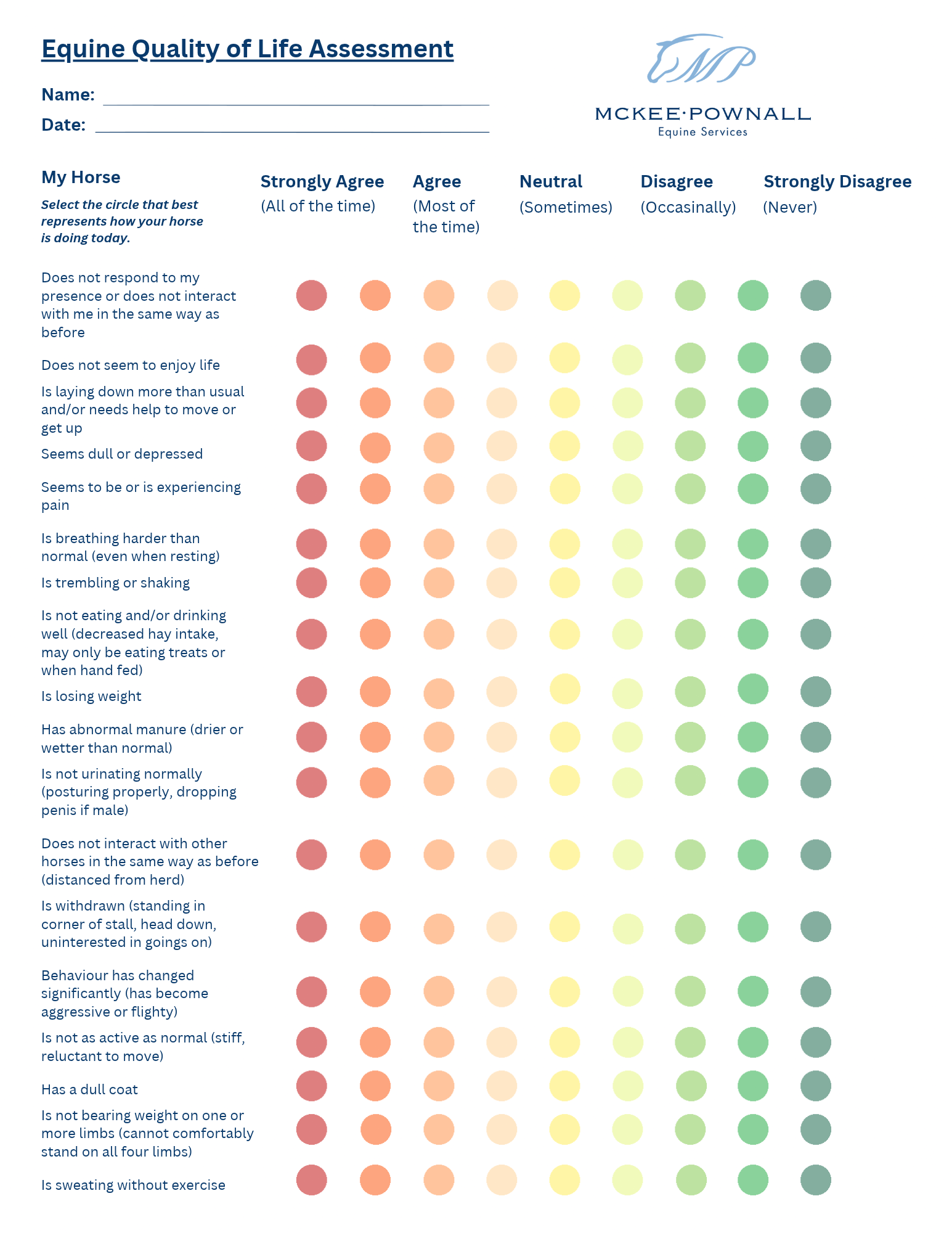
We've created a printable Equine Quality of Life Assessment to help horse owners organize their observations and recognize potential changes over time.
The assessment is intended as a practical reference, not a test or a tool for determining when it is time to say goodbye. It allows you to record what you're noticing on a particular day and revisit those observations in the future.
You may find it helpful to complete the assessment periodically, particularly if your horse is experiencing ongoing health challenges or you have begun noticing changes in their usual behaviour or routines. Comparing observations over time can help identify patterns and provide useful information to share with your veterinarian.
Click the image below to download our Quality of Life Assessment tool
When should I speak with my veterinarian?
You don't need to wait until you have several concerns or until you're certain something is wrong before reaching out.
If you notice a change in your horse's comfort, appetite, mobility, behaviour or general wellbeing, your veterinarian can help determine whether there may be an underlying medical concern and discuss possible treatment or management options.
Some changes require more immediate attention. Severe pain, difficulty breathing at rest, an inability to rise or bear weight, or sudden significant distress warrant urgent veterinary advice. Never delay seeking help to complete an assessment.
If you find yourself questioning whether your horse is still comfortable or enjoying their life, it's okay to start that conversation with your veterinarian, even if you're not sure what questions to ask.
Planning ahead is an act of care
For many horse owners, thinking about quality of life eventually means facing some very difficult questions about the future. These conversations can be emotional, and there is rarely a simple answer.
Considering your horse's wellbeing and discussing future options does not mean you have given up on them. It means you're thinking about their needs, their comfort and what may lie ahead.
There is no single checklist that can make these decisions for you. Your knowledge of your horse, careful observation and guidance from your veterinarian all play an important role in determining what is best for them.
You don't have to make these decisions alone. Our team understands how much your horse means to you, and we're here to help guide you through these conversations with compassion, care and respect.
Every horse and situation is different. This information and the accompanying assessment are intended to support observation and discussion, and do not replace veterinary assessment or advice.