
Equine Respiratory Care Program
Equine Respiratory Care Program
Helping horses breathe easier with personalized respiratory care
Respiratory problems can range from an occasional cough to chronic airway inflammation that affects your horse's comfort, performance, and quality of life.
Our Equine Respiratory Care Program is designed to help identify and manage respiratory concerns with an approach tailored to each horse. From diagnostic investigation and environmental management to nebulized medications and ongoing treatment, our goal is to help you understand what is happening and develop a practical plan that works for your horse, and for you.
Recognizing Respiratory Problems
Signs of respiratory disease aren't always dramatic. Some horses may have obvious difficulty breathing, while others show only subtle changes in their performance or recovery.
Talk to your veterinarian if you notice:
Persistent or recurring coughing
Increased breathing effort
Exercise intolerance or a decline in performance
Slower recovery after exercise
Nasal discharge
Increased respiratory effort during hot or humid weather
Changes in breathing that seem unusual for your horse
Early recognition and appropriate management can help improve your horse's comfort and long-term respiratory health.
Our Approach to Respiratory Care
Every horse is different, and there is no one-size-fits-all approach to respiratory disease.
Your veterinarian will consider your horse's history, clinical signs, lifestyle, and individual needs when recommending the most appropriate next steps.
Depending on your horse's circumstances, respiratory care may include:
A thorough veterinary examination and respiratory assessment
Diagnostic testing, including Bronchoalveolar Lavage (BAL) when appropriate
Environmental and management recommendations
Nebulized medications
Nebulizer treatments administered by our trained veterinary assistants
Training for owners who wish to administer treatments at home
Ongoing veterinary follow-up and adjustment of the treatment plan as needed
Our goal is to provide the information and support you need to make informed decisions about your horse's care.
Why a BAL May Be Recommended
A Bronchoalveolar Lavage (BAL) is considered the gold-standard diagnostic approach for evaluating lower airway inflammation. It allows us to collect a sample from the lower airways and better understand the type of inflammation affecting your horse.
This information can help your veterinarian develop a more targeted treatment and management plan.
A BAL is our recommended starting point when appropriate, particularly for horses with persistent, recurrent, or unexplained respiratory signs.
However, we understand that every horse and every owner's circumstances are different. If a BAL isn't feasible or isn't the right choice for you and your horse at this time, that doesn't mean there are no options available.
Your veterinarian can discuss other approaches to respiratory management and determine what may be appropriate based on your horse's clinical signs and history.
The best plan is one that provides meaningful benefit for your horse while fitting your individual circumstances.
Nebulizer Therapy
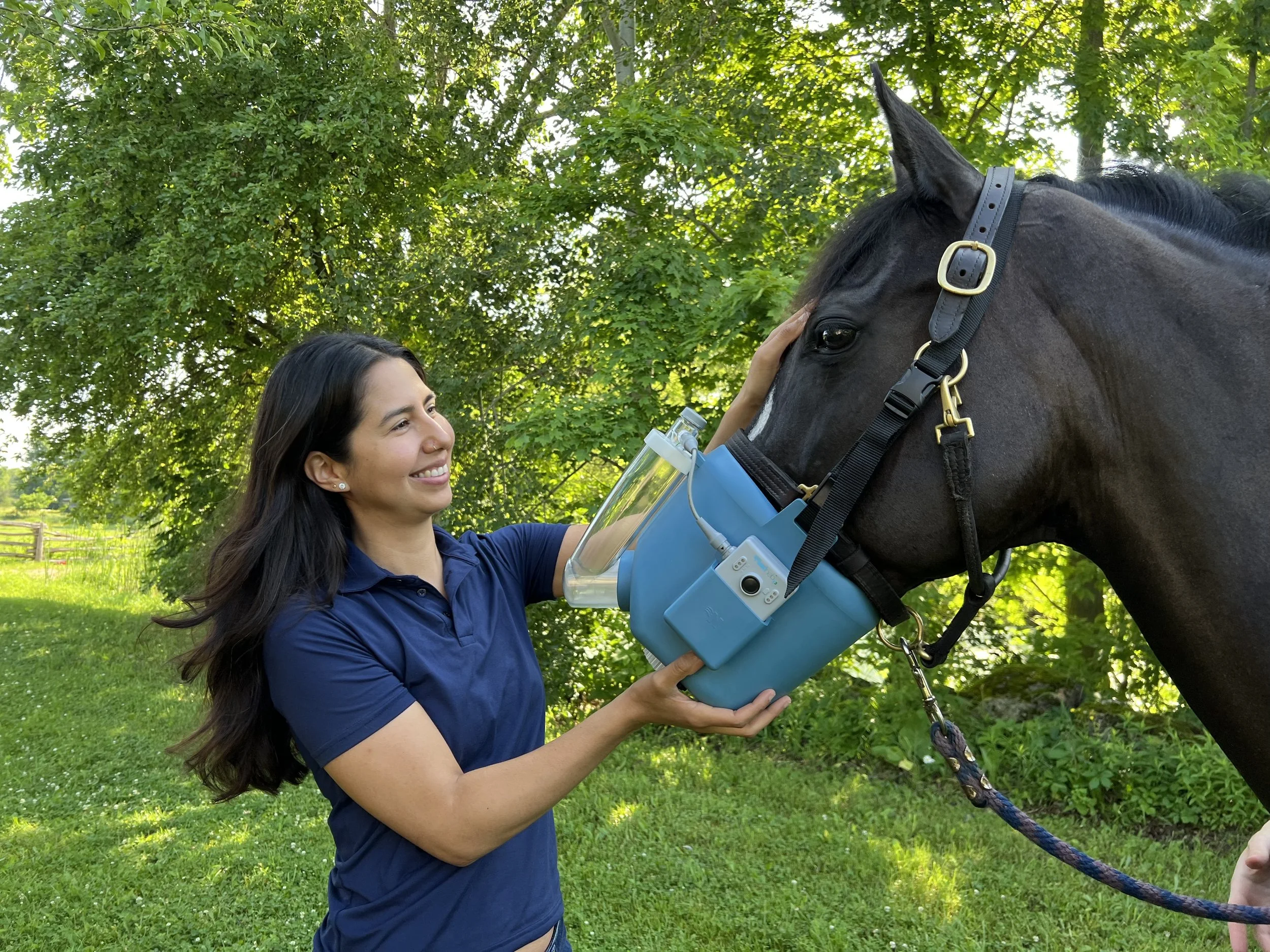
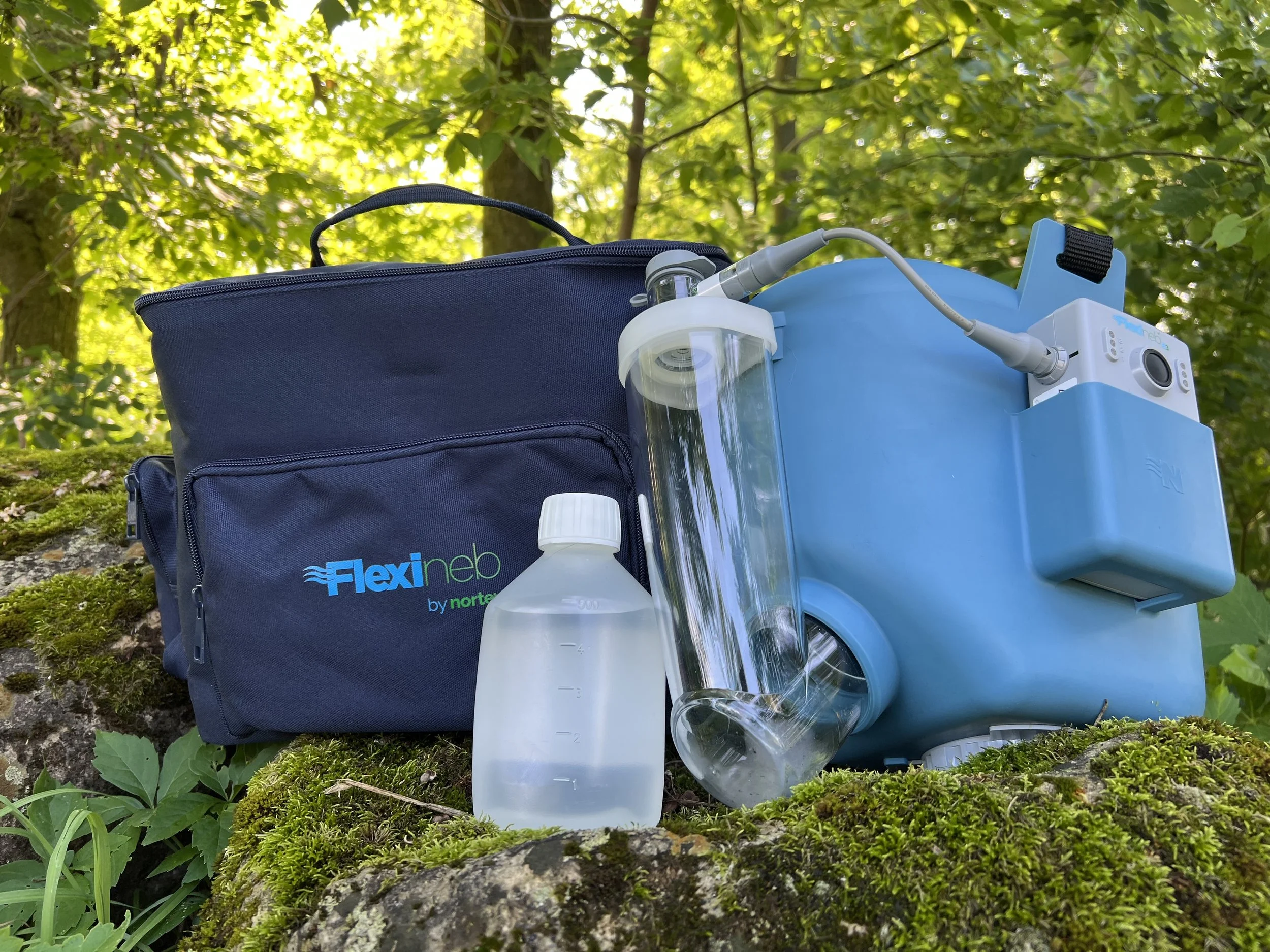
Nebulization delivers medication directly to the respiratory tract and can be an important part of managing horses with airway inflammation.
Our Equine Respiratory Care Program provides flexibility in how nebulizer therapy can be incorporated into your horse's care.
Depending on your horse's needs and your preferences, treatments may be:
Administered at the clinic or farm by our trained veterinary assistants
Our team can administer prescribed nebulized medications as part of an ongoing treatment plan.
Performed at home
For owners who would prefer to manage treatments themselves, our team can provide instruction and guidance on using a nebulizer appropriately.
Your veterinarian will determine whether nebulizer therapy is appropriate for your horse and which medication or treatment protocol is recommended.
Environmental Management Matters
For horses with respiratory disease, treatment is only one part of the picture. Reducing exposure to environmental irritants can be an important component of long-term management.
Depending on your horse's situation, your veterinarian may discuss:
Reducing dust exposure from hay and bedding
Improving ventilation
Limiting exposure to dusty or poorly ventilated environments
Managing exercise during periods of extreme heat and humidity
Other environmental changes specific to your horse
Small changes to a horse's environment can sometimes make a meaningful difference in respiratory health.
What Happens After the Initial Assessment?
Respiratory care doesn't necessarily end with a diagnosis or the first treatment.
Your veterinarian will work with you to establish an appropriate management plan and determine whether follow-up is needed. Treatment recommendations may change over time depending on your horse's response, environment, and clinical signs.
Our goal is to help you understand your horse's condition and feel confident managing it over the long term.
Frequently Asked Questions
Does my horse need a BAL to participate in the Respiratory Care Program?
Not necessarily.
A BAL provides valuable diagnostic information and is our recommended starting point when appropriate. However, we understand that diagnostic procedures aren't always feasible for every horse or owner.
Your veterinarian can discuss the available options and help determine an approach that makes sense for your situation.
Can my horse receive nebulizer treatments without having a BAL?
In some cases, yes.
Your veterinarian can assess your horse's history and clinical signs and determine whether nebulizer therapy is an appropriate option without a BAL.
Do I have to administer the nebulizer treatments myself?
No.
Depending on your horse's treatment plan, our trained veterinary assistants can administer prescribed nebulized medications for you. Home treatment and training may also be options.
Will my horse need nebulizer treatments long-term?
Not necessarily.
The duration and frequency of treatment depend on your horse's individual condition and response to therapy. Your veterinarian will help determine the most appropriate treatment plan and whether adjustments are needed over time.
What can I do at home to help my horse?
Environmental management is an important part of respiratory care. Your veterinarian can recommend practical changes based on your horse's individual circumstances, which may include reducing dust exposure, improving ventilation, and making adjustments to hay, bedding, or exercise routines.
My horse only coughs occasionally. Should I be concerned?
An occasional cough doesn't necessarily indicate significant respiratory disease, but recurring coughing or changes in your horse's breathing, exercise tolerance, or recovery are worth discussing with your veterinarian.
If you're concerned, we're happy to help determine whether further investigation is appropriate.
Why Choose McKee-Pownall Equine Services?
Respiratory disease management is about more than treating a cough. It requires understanding the horse, identifying potential contributors, and developing a plan that can realistically be incorporated into everyday life.
Our Equine Respiratory Care Program brings together veterinary assessment, diagnostic options, treatment, environmental management, and ongoing support to help horses with respiratory concerns receive individualized care.
Whether your horse needs a comprehensive respiratory workup or you're looking for guidance on managing an existing condition, our team can help you determine the next best step.
Concerned About Your Horse's Breathing?
If you've noticed changes in your horse's breathing, coughing, performance, or recovery, contact McKee-Pownall Equine Services to discuss your concerns with our veterinary team.